Dentures




Modern dentures combine improved materials, refined clinical techniques, and digital planning to deliver appliances that fit better, look more natural, and feel more comfortable than in the past. While dental implants and fixed restorations are excellent solutions for many people, removable dentures remain a dependable and adaptable option for restoring chewing, speech, and overall facial support when teeth are missing.
At Park Slope Dental Aesthetics, our denture services start with a careful clinical evaluation and a tailored treatment plan that prioritizes long-term oral health and daily function. We work with each patient to design prostheses that restore clear speech, efficient chewing, and a balanced facial profile so you can feel more confident in everyday life.
Tooth loss does more than change the way a smile looks — it alters how the mouth performs. Missing teeth disrupt the normal distribution of biting forces, which can accelerate wear on neighboring teeth and encourage shifting. Over time these changes may lead to uneven chewing, bite misalignment, and muscle tension in the jaw.
Facial appearance is also affected when teeth are absent. Natural teeth provide vertical support for the lips and cheeks; without that support, the lower face can appear collapsed or aged. Appropriately designed dentures restore that vertical dimension and help reestablish facial contours so features look proportionate and refreshed.
Addressing tooth loss in a timely, thoughtful way helps prevent secondary problems. Unfilled spaces allow adjacent teeth to tip or drift, and opposing teeth can over-erupt into gaps, creating more complex restorative needs later. A well-planned denture helps preserve the alignment of remaining teeth and protects the mouth’s overall function.

A denture is a removable dental appliance consisting of prosthetic teeth set within a supporting base that rests on the gums. The base is contoured to match the shape of the mouth so the device seats comfortably and distributes chewing forces across the available tissues, improving bite efficiency and helping with speech clarity.
Removability is an intentional design feature: being able to take the denture out nightly makes cleaning both the prosthesis and the gums easier, which supports oral hygiene. Removing the denture for regular cleaning and allowing the tissues to rest overnight are simple habits that contribute to long-term comfort and tissue health.
Contemporary denture fabrication benefits from digital workflows, careful occlusal analysis, and individualized tooth selection. These advances let clinicians fine-tune fit, color, and tooth arrangement so dentures can look natural and align comfortably with facial proportions and speech patterns.
Selecting an appropriate denture depends on how many teeth are missing, the condition of the supporting gums and bone, and the patient’s goals for stability, maintenance, and appearance. A comprehensive clinical exam — often including imaging — helps determine whether a partial, full, or implant-assisted denture best matches a patient’s functional and aesthetic priorities.
Partial dentures are designed to replace one or several missing teeth while working alongside existing natural teeth. They not only restore chewing function but also maintain proper spacing to prevent drifting of adjacent teeth. Partial appliances are available in several frameworks and materials, giving clinicians options to balance strength, comfort, and discreetness.
Full (complete) dentures restore an entire arch when all natural teeth in the arch are missing or require extraction. With careful attention to bite relationships, lip support, and tooth proportions, full dentures can reestablish comfortable function and a pleasing appearance that complements a patient’s facial features.
When creating a complete denture, timing matters. A conventional full denture is fabricated after extraction sites have healed, which helps the prosthesis fit more predictably once soft tissues settle. Multiple impressions and try-in visits are used to capture the changing tissue contours and to verify function and esthetics before the final prosthesis is completed.
Immediate dentures are delivered at the time of tooth removal so patients do not have to go without teeth during healing. While this approach preserves appearance and basic function immediately after extractions, it often requires relining or adjustments as tissues remodel. Careful planning and follow-up are essential to manage these changes smoothly.
Overdentures
Overdentures gain extra retention by fitting over prepared tooth roots or precision attachments. Preserving select roots when appropriate can help maintain bone volume and provide a more stable base for a removable prosthesis.
Implant-supported dentures
Implant-supported designs anchor a removable denture to implants placed in the jaw. This approach improves retention and chewing efficiency while still allowing easy removal for cleaning and maintenance.
A successful denture begins with a detailed oral evaluation that includes assessment of gum health, jaw relationships, and remaining teeth. Precise impressions and bite records create the foundation for a prosthesis built to harmonize with a patient’s bite and facial proportions.
Try-in appointments give patients and clinicians the chance to confirm tooth position, color, and vertical dimension before the final denture is processed. These incremental checks reduce the risk of common issues such as an incorrect bite height or unnatural tooth placement that can affect comfort and function.
When needed, pre-prosthetic procedures — for example, minor soft tissue smoothing or removing compromised teeth — are recommended to improve the denture’s foundation. Addressing these factors ahead of time helps create a stable, long-lasting fit and minimizes the need for frequent adjustments.
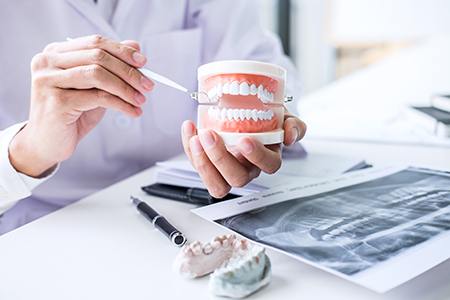
Adjusting to a new denture is a gradual process. In the first days and weeks some patients notice increased saliva production, mild changes in speech, and an adaptation period for chewing. Starting with softer foods and taking smaller bites helps rebuild confidence and function without overwhelming the bite.
Follow-up visits are an important part of the process. These appointments allow clinicians to identify pressure points, refine occlusion, and make targeted adjustments that dramatically improve comfort. If sore spots appear, brief wear and a timely adjustment visit can quickly resolve the issue.
Long-term maintenance includes daily cleaning of the denture, overnight removal to let gums rest, and routine oral examinations to monitor the health of any remaining teeth and supporting tissues. Periodic relines or adjustments may be needed as the mouth’s contours change with time to maintain a secure and comfortable fit.

Successful denture care is a team effort. Honest communication about goals and realistic expectations, consistent hygiene practices, and attendance at follow-up appointments all contribute to a prosthesis that performs well year after year. Our clinicians provide clear guidance on daily care and on recognizing signs that call for professional attention.
At our Brooklyn, NY practice, we combine tried-and-true techniques with individualized planning to deliver dentures that respect both oral health and personal preferences. The aim is a prosthesis that supports everyday activities — eating, speaking, and smiling — with renewed ease and confidence.
If you would like to learn more about partial, complete, or implant-retained denture options and which approach might suit you best, please contact us for more information.
Dentures are generally categorized as partial, full (complete), overdentures, and implant-supported removable prostheses. Partial dentures replace one or several missing teeth and work alongside natural teeth, while full dentures replace all teeth in an arch. Overdentures and implant-supported removable dentures add retention and stability by using preserved roots or dental implants as anchors.
Materials and fabrication methods vary from traditional acrylic bases to metal or flexible frameworks and digitally designed teeth for improved fit and esthetics. Clinicians select a design based on the number of missing teeth, the condition of gums and bone, and the patient's functional and aesthetic goals. Modern workflows allow more predictable fit, natural tooth arrangement, and refined occlusion than older denture techniques.
Implant-supported dentures are removable prostheses that attach to dental implants to increase retention and chewing efficiency compared with conventional removable dentures. Because implants anchor the denture, wearers typically experience improved stability, clearer speech, and greater confidence when eating a wider range of foods. Implant-supported solutions still allow removal for cleaning and maintenance, combining stability with the hygiene advantages of a removable prosthesis.
Not every patient is an immediate candidate for implants; bone volume, systemic health, and overall oral conditions are evaluated during planning. When bone is limited, clinicians may recommend bone-preserving options such as overdentures on retained roots or grafting procedures followed by implant placement. A careful clinical assessment and imaging help determine whether implant-retained or conventional dentures best match a patient's needs.
The denture process begins with a comprehensive clinical evaluation that assesses gum health, jaw relationships, remaining teeth, and any necessary imaging. Precise impressions or digital scans, bite records, and tooth-selection appointments establish the foundation for a prosthesis designed to harmonize with facial proportions and speech patterns. Try-in visits allow patients and clinicians to confirm tooth position, color, and vertical dimension before the final denture is processed.
When pre-prosthetic procedures are needed—such as extractions or minor soft-tissue adjustments—these are scheduled to create a stable foundation and reduce the need for frequent corrections later. Immediate dentures can be provided at the time of extractions when appropriate, but they often require subsequent relines as tissues heal. Ongoing follow-up appointments are important to identify pressure points and refine occlusion for long-term comfort and function.
Adapting to a new denture commonly involves an initial adjustment period during which increased saliva, mild speech changes, and altered chewing patterns are typical. Starting with softer foods and taking smaller bites helps patients regain confidence while minimizing stress on new denture surfaces. Most people notice steady improvement in speech and chewing as muscles adapt and the prosthesis becomes familiar.
Follow-up visits are important to address sore spots, refine occlusion, and make minor adjustments that greatly improve comfort. Small pressure points can often be relieved chairside, and periodic adjustments prevent longer-term irritation or tissue changes. If persistent pain, difficulty breathing, or severe sore spots occur, patients should contact their clinician promptly for evaluation.
Daily denture care includes removing the prosthesis for cleaning, brushing all surfaces with a soft denture brush and cleanser, and rinsing thoroughly before reinserting. Nightly removal allows the gums to rest and reduces the risk of tissue irritation, while soaking in a recommended denture solution can help control stains and biofilm. Avoiding abrasive household cleaners and stiff brushes preserves acrylic and tooth surfaces.
Routine oral examinations remain essential even when wearing full dentures, as clinicians monitor the health of the gums, any remaining teeth, and jawbone changes that might affect fit. Periodic relines, repairs, or adjustments help maintain stability and comfort as the mouth's contours change with time. Proper storage, gentle handling, and professional maintenance extend a denture's serviceable life and reduce the likelihood of sudden problems.
Partial dentures are recommended when one or more natural teeth remain in the arch and those teeth are suitable to support a removable appliance. A partial denture helps restore chewing function, preserves spacing to prevent adjacent teeth from tipping or drifting, and can be designed to be as discreet as possible. Choosing a partial also allows the patient to retain natural teeth that are healthy and functional, which benefits overall oral biomechanics.
The decision between partial and full replacement depends on the health of remaining teeth, periodontal support, and long-term prognosis for those teeth. Framework options vary from cast metal designs that offer durability to flexible acrylic options that enhance comfort and aesthetics. A clinician will evaluate clinical findings and patient goals to recommend the most appropriate pathway.
Immediate dentures are fabricated in advance and inserted at the time of tooth removal so the patient does not have a period without teeth during healing. This approach preserves appearance and basic function immediately after extractions and can simplify the transition from natural teeth to a prosthesis. Because tissues remodel during healing, immediate dentures commonly require relines or adjustments as the mouth changes.
Planning for immediate dentures includes pre-extraction impressions and careful communication about expectations, since the final fit will evolve during the post-extraction healing phase. Follow-up visits are essential for monitoring tissue changes and refining fit to eliminate sore areas and improve retention. For some patients, a future conventional denture fabricated after complete healing or an implant-supported option may provide a more predictable long-term fit.
Well-designed dentures restore the vertical dimension of the lower face and provide lip and cheek support that can reduce a collapsed or aged appearance caused by missing teeth. Reestablishing proper bite relationships with a denture also helps distribute chewing forces and can reduce abnormal wear or shifting of remaining teeth. Improving function and appearance often benefits a patient's comfort and social confidence in everyday activities.
While dentures help restore external support, they do not prevent the gradual bone remodeling that follows tooth loss to the same degree as dental implants. When preserving bone height is an important objective, clinicians may discuss implant-retained options or root-preserving overdentures as part of a comprehensive plan. Realistic expectations and regular monitoring allow patients to balance esthetic goals with long-term oral health strategies.
Determining the correct fit and tooth arrangement begins with a thorough examination of soft tissues, remaining teeth, and jaw relationships, often supplemented by digital scans or radiographs. Accurate impressions and bite records establish the vertical dimension and occlusal scheme, and try-in appointments give both clinician and patient the chance to evaluate esthetics, phonetics, and function. Fine-tuning during these stages reduces the likelihood of common issues such as improper bite height or tooth placement that can affect comfort and speech.
Tooth shape, size, and shade are selected to harmonize with facial proportions, lip support, and the patient's preferences while preserving natural speech patterns. Occlusal adjustments distribute forces evenly and protect remaining teeth and tissues from excessive wear. Open communication about expectations and observed function at try-ins improves final outcomes and patient satisfaction.
Long-term denture care includes regular dental visits to monitor the condition of the prosthesis, the health of oral tissues, and any remaining natural teeth. Dentures may need relines, repairs, or periodic replacement as the jawbone and soft tissues remodel over time, and routine checkups allow clinicians to catch wear or fit issues early. Maintaining consistent hygiene practices and wearing the denture as recommended reduce the risk of sore spots and infections.
At our Brooklyn, NY practice we encourage scheduled reviews so clinicians can perform necessary adjustments, evaluate tissue health, and discuss evolving options such as implant-assisted retention when appropriate. Prompt attention to discomfort, changes in fit, or difficulty chewing helps preserve function and prevent more complex problems. Clear communication between patient and clinician supports a prosthesis that remains comfortable and reliable for years.
Book a consultation today and take the first step toward the confident, beautiful smile you deserve.
