Ceramic Crowns




At Park Slope Dental Aesthetics, our approach to ceramic crowns centers on dependable outcomes and natural-looking results. We combine careful diagnosis, contemporary ceramic materials, and precise fabrication techniques so each crown restores function while blending seamlessly with your smile. Our goal is to balance durability with esthetics so restorations look and feel like the teeth they replace.
Teeth are subjected to constant forces, acid exposure, and the wear that comes with daily use. When a tooth loses too much structure for a filling to be reliable, a full-coverage restoration becomes the smart alternative. Ceramic crowns are widely chosen today because they pair strength with a lifelike appearance and excellent biocompatibility.
This page explains when a crown is the appropriate choice, how modern ceramic systems differ from older options, how clinicians select materials based on function and appearance, and what to expect from the treatment process. We aim to provide clear, practical guidance so you can discuss the best option with your dental team.
A crown is recommended when preserving the long-term health of a tooth requires more than a conventional filling. Typical reasons include extensive decay that compromises structural integrity, a large failing restoration, deep cracks that risk splitting the tooth, or substantial tooth loss following trauma. In these situations, a crown shields the remaining tooth and restores reliable chewing function.
Crowns are also the restoration of choice after root canal therapy because treated teeth can become brittle and need reinforcement. When replacing a missing tooth with an implant, the crown forms the visible, functional portion of the new tooth. Crowns can also anchor bridgework when adjacent teeth require coverage for both strength and alignment.
Your clinician will evaluate alternatives, but when longevity and protection are priorities—especially for teeth under heavy bite forces—a crown is often the most conservative route to preserve oral health. Factors such as the amount of remaining tooth, the tooth’s position in the mouth, and your bite dynamics guide the final recommendation.
To restore teeth with extensive decay or irreparable fractures
To replace or reinforce large, failing fillings
To complete implant restorations with a lifelike crown
To protect a tooth following endodontic (root canal) therapy
To improve shape or color when conservative cosmetic options are insufficient

Contemporary all-ceramic crowns differ from older metal-based restorations in several important ways. Their optical properties—translucency, light scattering, and subtle color depth—closely mimic natural enamel, so they integrate with surrounding teeth without the dark margins sometimes seen with porcelain-fused-to-metal designs.
Advances in CAD/CAM milling and improved ceramic formulations permit precise fits and thinner restorations without sacrificing strength. That can allow clinicians to preserve more of the natural tooth during preparation, which benefits long-term tooth health and reduces the need for more invasive treatments later.
Ceramics are metal-free and generally well tolerated by soft tissues, which minimizes the risk of allergic reactions or gum discoloration that can occur with metal restorations. Many modern ceramics also resist staining and retain their esthetic qualities over time when maintained with good oral hygiene.
When matched appropriately to a patient’s needs and occlusion, these materials deliver durable performance with a natural finish—providing both functional reliability and a smile patients are comfortable showing.
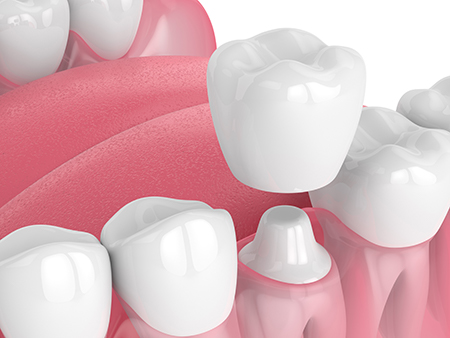
Ceramic materials vary across a spectrum of optical qualities and mechanical strength. Selecting the right option depends on the tooth’s role: anterior teeth typically require superior translucency and precise shade matching, while posterior teeth must withstand higher biting forces and therefore benefit from stronger, fracture-resistant ceramics.
Lithium disilicate is favored for its attractive esthetics and reliable strength in front teeth and single-unit restorations. Zirconia, especially monolithic or high-translucency formulations, provides exceptional toughness for back teeth and multi-unit bridges. Some restorations combine a strong ceramic core with layered porcelain to achieve both strength and lifelike surface detail.
Additional factors include how much natural tooth remains, whether a core buildup or post is needed, and whether the patient grinds their teeth or has an uneven bite. Your dentist will weigh these considerations and explain the trade-offs so the chosen material supports both function and appearance.
Common ceramic options you may hear about include:
Lithium disilicate — excellent esthetics with good strength
Leucite-reinforced pressable porcelains — natural color and texture
Monolithic zirconia — high strength for posterior or bridgework
High-translucency zirconia — improved esthetic blending with added durability

The process begins with a thorough exam, digital images, and a conversation about options. If preparatory work is needed—such as treating decay, placing a buildup, or completing root canal therapy—those steps are performed first to ensure a stable foundation for the crown.
To prepare the tooth, the clinician shapes the surface to create space for the crown while preserving as much healthy structure as possible. Accurate impressions—often captured with digital scanning—are used to design the restoration. A temporary crown may be placed while the final piece is fabricated by a laboratory or milled on-site with CAD/CAM technology.
On the placement visit, the crown is evaluated for fit, shade, and bite harmony before being permanently bonded or cemented. Aftercare emphasizes routine oral hygiene, avoiding undue force on the restoration, and maintaining regular dental visits to monitor fit and function. Mild sensitivity immediately after placement can be normal; persistent pain or looseness should be checked promptly.
With sensible care—brushing twice daily, flossing, and routine dental checkups—ceramic crowns often provide many years of reliable service while maintaining a natural appearance.
We approach crown treatment with a focus on long-term success and a natural outcome. Each restoration begins with a tailored assessment that considers structural needs, your esthetic goals, and how the crown will function within your bite. This personalized planning helps avoid surprises and aligns expectations from the outset.
Whether using laboratory-fabricated crowns or in-office CAD/CAM workflows, we prioritize contemporary materials and precise techniques to deliver a restoration that preserves tooth structure when possible and integrates with adjacent teeth. Clear communication is part of our process: your clinician will explain the recommended material, why it fits your situation, and what to expect throughout treatment.
Attention to detail—accurate impressions, careful shade selection, and thoughtful occlusal adjustment—contributes to predictable, long-lasting results. Our team works to ensure each crown not only restores function but also supports a natural, confident smile.
If you’d like to learn more about ceramic crowns or discuss whether one is right for your situation, please contact us for additional information. We’re available to answer questions and help you plan the best path to a healthy, natural-looking smile.
A ceramic crown is a full-coverage dental restoration made from advanced glass- or crystalline-based materials designed to replace the visible portion of a damaged tooth. These crowns are metal-free and engineered to replicate the optical properties of natural enamel, including translucency and color depth. Because they do not contain metal, ceramic crowns eliminate dark margins and reduce the risk of gum discoloration commonly seen with older porcelain-fused-to-metal designs.
Compared with traditional metal or metal-ceramic crowns, contemporary ceramic systems can be milled very precisely and finished with lifelike surface texture. Different ceramic formulations offer a balance between strength and esthetics so clinicians can choose the best option for a given tooth. The result is a restoration that aims to restore function while blending seamlessly with adjacent teeth.
A ceramic crown is recommended when a tooth has lost too much structure for a filling to provide reliable long-term support or when a veneer would not offer sufficient protection. Typical indications include extensive decay, large failing restorations, deep cracks that threaten tooth integrity, and teeth that require reinforcement after root canal therapy. Crowns are also used to complete implant restorations and to anchor bridgework when adjacent teeth need coverage for strength and alignment.
Your dentist will evaluate factors such as how much natural tooth remains, the tooth's position in your bite, and whether the tooth endures heavy chewing forces. When preserving the long-term health of the tooth is the priority, a crown is often the most conservative and predictable option. The clinical goal is to shield the remaining tooth structure while restoring reliable chewing function.
Material selection depends on the tooth's role in the mouth and the balance between esthetics and mechanical demands. Anterior teeth generally require materials with superior translucency and nuanced shading to match neighboring teeth, while posterior teeth often need ceramics with higher fracture resistance to withstand chewing forces. Dentists commonly consider lithium disilicate for its attractive esthetics and reliable strength, and zirconia for its exceptional toughness in back teeth or multi-unit restorations.
Other considerations include how much tooth remains, whether a core buildup or post is necessary, and whether the patient has habits such as clenching or bruxism that increase stress on the restoration. Some restorations combine a strong ceramic core with layered porcelain to obtain both strength and lifelike surface detail. Your clinician will discuss the trade-offs so the chosen material supports both function and appearance.
The process begins with a comprehensive exam, digital images or scans, and a discussion of your goals and clinical needs. Any preparatory steps such as treating decay, placing a buildup, or completing root canal therapy are completed first to create a stable foundation for the crown. Tooth preparation is then performed to create space for the restoration while preserving as much healthy structure as possible, and accurate impressions are captured, often with digital scanning technology.
Many practices use CAD/CAM milling or send digital files to a laboratory to fabricate the final crown, with a temporary restoration placed if needed while the permanent piece is made. On the placement visit, the crown is evaluated for fit, shade, and bite harmony before being permanently bonded or cemented. Your clinician will review aftercare, signs to monitor, and a plan for routine follow-up to ensure the restoration integrates well over time.
Ceramic crowns can provide many years of reliable service when properly designed, placed, and cared for, though lifespan varies with individual circumstances. Factors that affect longevity include the chosen material, the amount of remaining tooth structure, the quality of the fit and cementation, and the patient’s oral hygiene and bite forces. Regular dental checkups help identify early wear, marginal breakdown, or other issues that could shorten a crown's service life.
Additionally, habits such as biting hard objects, chewing ice, or untreated grinding can accelerate wear or lead to chipping and fractures. Protective strategies like occlusal adjustments and nightguards for patients who grind their teeth can help extend the restoration's life. With routine brushing, flossing, and professional care, many ceramic crowns remain functional and esthetic for a decade or longer.
Yes, ceramic crowns are commonly used as the visible, functional portion of implant restorations and can also be incorporated into fixed bridgework. On an implant, the crown is attached to an abutment and designed to mimic the natural tooth while distributing forces appropriately to the implant and surrounding bone. For bridges, ceramics can form individual crowns that are connected to replace one or more missing teeth, with material choice guided by strength requirements and esthetic goals.
When planning implant or bridge restorations, clinicians evaluate occlusion, the span of the restoration, and whether a monolithic or layered ceramic best balances durability and appearance. In some cases, stronger ceramics such as monolithic zirconia are selected for posterior bridges, while lithium disilicate or layered ceramics may be favored for single anterior crowns. Careful design and material matching help ensure predictable function and a natural look.
Grinding and clenching place extra stress on restorations and increase the risk of chipping, cracking, or premature wear, so these habits must be considered when planning a crown. Dentists often recommend stronger ceramic formulations, adjusted occlusal designs, or reinforced restorations for patients who brux to improve resistance to functional forces. In addition, treating the underlying habit with a custom nightguard or occlusal therapy can significantly reduce the risk of prosthetic failure.
During the evaluation, your clinician will assess wear patterns, muscle activity, and bite dynamics to determine whether a ceramic crown is appropriate and which material will best tolerate your forces. Preventive strategies and careful occlusal adjustment at placement further protect the restoration. Open communication about your habits helps the team design a long-lasting solution tailored to your needs.
Yes, modern ceramic systems are designed to closely match the color, translucency, and surface texture of natural teeth, and dentists use several techniques to achieve an accurate match. Shade selection may involve visual comparison under controlled lighting, digital shade mapping, and sample restorations or try-ins to refine color and translucency. Skilled laboratory technicians or in-office CAD/CAM workflows can layer or stain ceramics to recreate subtle color gradients and surface characterization.
When a highly esthetic result is needed, clinicians consider surrounding teeth, lighting conditions, and the patient’s smile line to select materials and finishing techniques that blend seamlessly. For patients seeking comprehensive esthetic planning, clinicians may coordinate bleaching, contouring, or other adjunctive procedures before final crown fabrication. The goal is a harmonious, natural-looking restoration that complements your smile.
Complications with ceramic crowns can include sensitivity, marginal staining, ceramic chipping or fracture, and issues with fit or bite harmony, although many of these are preventable with proper planning and maintenance. Mild sensitivity after placement is common and often subsides as tissues adapt, but persistent pain, looseness, or recurrent decay at the margins should prompt a prompt dental evaluation. Chipping or fracture may require repair with resin, replacement of the crown, or modification of the opposing dentition depending on severity.
Regular examinations help detect early signs of marginal breakdown or occlusal problems so corrective steps can be taken before more extensive damage occurs. If a crown fails due to underlying disease such as recurrent decay or a compromised root, the tooth may need additional restorative or endodontic care before replacement. Clear communication with your dentist ensures timely intervention and helps maintain long-term oral health.
After placement, maintain excellent oral hygiene by brushing with a soft-bristled brush and flossing daily to prevent decay and gum disease at the crown margins. Avoid using the crown to open packages or bite extremely hard objects, and be mindful of habits like nail-biting or chewing ice that can stress the restoration. Attend regular dental checkups so your clinician can monitor the crown's fit, occlusion, and the health of surrounding tissues.
The office of Park Slope Dental Aesthetics recommends following any specific home-care instructions provided at your visit and reporting persistent sensitivity, looseness, or visible damage promptly. If you have a history of bruxism, ask about a custom nightguard to protect both natural teeth and restorations. With routine care and attention to protective habits, ceramic crowns can remain functional and esthetic for many years.
Book a consultation today and take the first step toward the confident, beautiful smile you deserve.
